Trump/Tinubu Ignores Borno, Zamfara, Katsina, Niger —The Sokoto Strike and the Politics of Symbolic Warfare
 managarciya
by Mohammed Bello Doka.
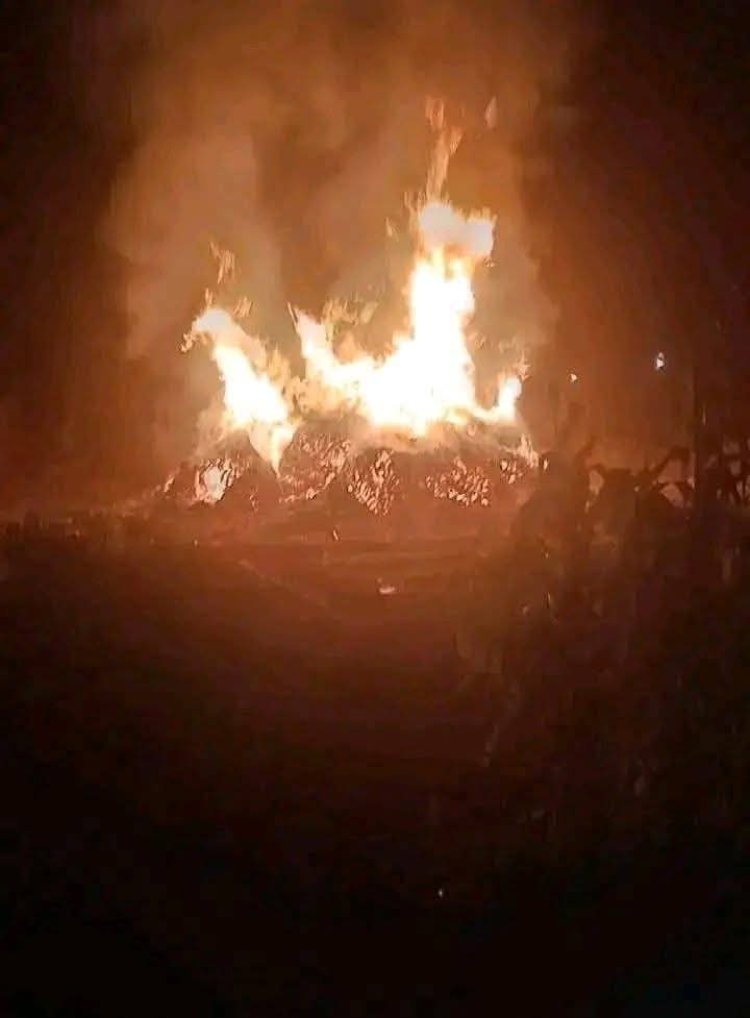
When airstrikes were announced in Sokoto State today, the first question Nigerians asked was not who authorized it but why there. The timing matters because this is not a historical debate; it is a live security decision unfolding in real time, demanding clarity now—not after narratives have hardened. That question has still not been answered—because answering it would expose an uncomfortable truth: this operation was driven more by politics and symbolism than by the urgent need to protect Nigerian lives.
For years, Nigeria’s deadliest killing fields have been well documented. Borno State , Zamfara State, Katsina State, Niger State, and parts of Kebbi State have hosted the most entrenched bandit and terror infrastructures in the country. Entire forests are named in security briefs. Entire corridors are known to villagers. Entire commanders are mentioned casually in daily conversations, radio programs, and court filings. These are not hidden enclaves; they are open secrets. Yet when foreign firepower finally arrives, it bypasses these epicentres and lands in Sokoto—chosen less for operational necessity than for what it represents.
Sokoto is symbolic. It is historically associated with the Sokoto Caliphate, a name that resonates far beyond Nigeria’s borders. A strike there sends a message. It photographs well. It fits neatly into global narratives about “Islamist terror.” But symbolism does not dismantle terror economies, nor does it end mass kidnappings in Zamfara, Katsina, or Niger where Nigerians are killed weekly. Symbolism does not rescue communities living under daily siege, nor does it interrupt the revenue chains of banditry that have thrived for years in plainly identifiable locations.
This is where the politics begin.
For Donald Trump, the calculus is clear. He is not fighting for Nigerian villagers. He is fighting for political capital at home—burnishing his credentials before a conservative Christian base and pro-Israel Jewish constituencies that respond strongly to emotional, muscular, headline-friendly actions against anything framed as “Islamic terror.” Sokoto’s symbolism offers ideological resonance that travels well in Western political discourse. Zamfara’s forests do not. Niger State’s terror camps do not. Katsina’s bandit corridors do not. The choice of target reveals the audience, not the battlefield.
For Bola Tinubu, the incentives are just as troubling. This administration has increasingly looked outward for validation rather than inward for legitimacy. Western applause now substitutes for domestic accountability. A symbolic strike endorsed by foreign partners is easier than confronting the entrenched failures of Nigeria’s own security architecture in Zamfara, Katsina, and Niger. It creates the appearance of action without the pain of reform. It also raises the disturbing question of agency: did Nigeria shape this operation, or was it merely informed? Either answer is damning. If Nigeria had no meaningful input, that is a sovereignty failure. If Nigeria agreed to symbolic targets over operational ones, that is a governance failure. Both scenarios are deeply alarming.
And yet, Nigerians are owed answers—today, not later.
Who exactly was targeted in Sokoto?
Which camp was hit?
Which commander was neutralised?
Which network was dismantled?
No names have been officially provided. No camps clearly identified. No leaders confirmed eliminated. This absence of specificity is especially troubling given the level of intelligence claimed to underpin the operation. If high-grade intelligence exists, clarity should follow action. Instead, the public is asked to accept broad labels without evidence.
This silence is indefensible. Nigeria’s terror and bandit leadership is not a mystery. Names such as Bello Turji, Ado Aleru, Dogo Gide, and other commanders operating across Zamfara, Katsina, Niger, and Kebbi have been reported repeatedly over the years. Their areas of influence are not hidden. Their routes are known to farmers and villagers long before they are acknowledged by Abuja. Their camps are domiciled in specific forests that Nigerians can name without consulting satellite imagery. If foreign forces claim not to know them, Nigerian authorities certainly do—and that raises a more damning question: why were these figures not the priority targets?
The intelligence paradox deepens the unease. With the world’s most sophisticated surveillance capabilities brought into play, the continued refusal to define the exact group targeted, the precise camp struck, or the specific leaders intended to be eliminated strains credibility. If the claim is uncertainty, then competence must be questioned. If the claim is secrecy, then accountability has been sacrificed. Neither explanation reassures a population that has endured years of violence.
Equally disturbing is the lack of clarity about coordination. What was the level of operational planning between Nigeria and the United States? Did Nigeria propose targets, or was it merely informed as usual? If Nigeria merely received notice, then sovereignty is reduced to a courtesy call. If Nigeria participated in choosing symbolism over substance, then it knowingly sidelined the very regions where Nigerians die the most. Both paths are unacceptable, and both demand answers.
Just weeks earlier, Nigeria demonstrated its capacity for decisive regional action when it intervened militarily to protect the government of Benin during a security crisis. Aircraft were deployed. Force was projected. Political will was found. Yet today, Nigeria is presented as needing to be “saved” from loosely organised, poorly educated bandits who have terrorised rural communities for years. Why does urgency appear when foreign interests are at stake, but evaporate when Nigerian citizens are the victims? Why can force be projected beyond borders to secure a neighbour’s stability, while Nigeria’s own killing fields remain largely untouched?
This contradiction cannot be explained away with talk of intelligence gaps or operational complexity. It points instead to misplaced priorities and political convenience. It suggests that external validation now carries more weight than internal safety, and that optics have overtaken outcomes in the calculus of security.
If the true objective were to save lives, the bombs would fall where Nigerians are dying the most. If the true objective were to dismantle terror networks, named leaders and known camps would be the focus. If the true objective were security, transparency would follow action—especially on the very day the strike occurs.
Instead, Nigerians are left with spectacle without clarity, force without accountability, and symbolism without justice.
So the difficult questions remain—unanswered and urgent:
Was this strike about ending terrorism, or about winning elections abroad?
Was it about protecting Nigerians, or about pleasing foreign allies and external saviours?
Was it a joint decision reflecting Nigerian priorities, or an externally driven script Nigeria merely endorsed?
And most importantly: when will Nigerian lives matter enough to define Nigeria’s security priorities?
Bombing symbols while ignoring killing fields is not counterterrorism.
It is political theatre—performed at great cost to truth, sovereignty, and the people who continue to die unseen.
Abuja Network News
Mohammed Bello Doka
For inquiries: bellodoka82@gmail.com